Template
AI Side Hustle Idea Map
A lightweight idea map for choosing beginner AI side hustles based on skills, audience, and delivery format.
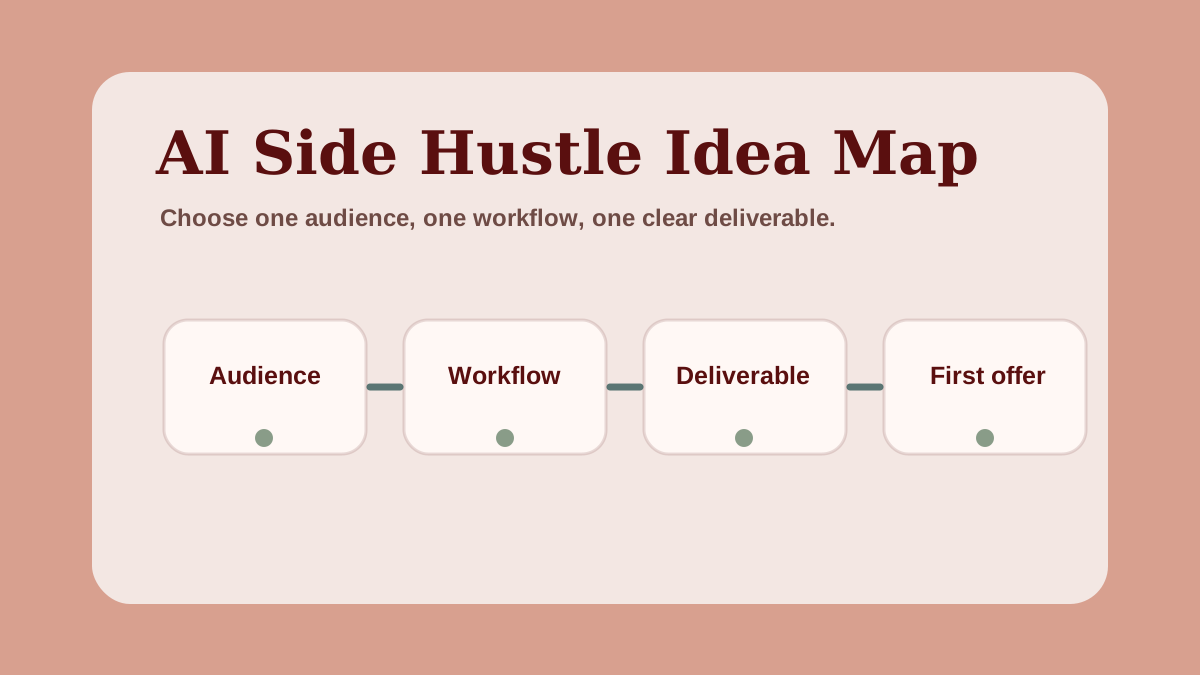
Use this idea map to choose a practical AI side hustle direction without drifting into vague offers.
The best beginner AI side hustle ideas usually start small. They solve one practical problem for one kind of person using one clear workflow. This resource helps you avoid broad promises and choose a direction you can actually practice.
What this idea map is for
This is not a list of random AI business ideas. It is a decision tool.
Beginners often get stuck because every idea sounds possible. One video says to start a faceless YouTube channel. Another says to sell prompts. Another says to automate content. The problem is not lack of ideas. The problem is choosing one idea that matches your current skills, tools, and time.
Use this map to narrow your focus before you create a landing page, write content, or build a digital resource.
Choose your lane
Start with one of these lanes:
- Content planning
- Prompt templates
- Research briefs
- Workflow checklists
- Repurposing systems
| Lane | Beginner-friendly deliverable | Example audience |
|---|---|---|
| Content planning | 30-day topic map | Local service business |
| Prompt templates | Prompt pack for one task | Coaches or creators |
| Research briefs | Competitor or topic summary | Bloggers |
| Workflow checklists | Repeatable process document | Freelancers |
| Repurposing systems | Blog-to-pin or video-to-post plan | YouTube channels |
Match it to an audience
Examples:
- Local businesses
- Bloggers
- Pinterest creators
- Coaches
- YouTube channels
Choose an audience you can understand without weeks of research. A simple audience makes your examples better, your prompts clearer, and your offer easier to explain.
Score each idea before choosing
Use this simple scoring method. Give each idea a score from 1 to 3.
| Score area | Question | Strong sign |
|---|---|---|
| Skill fit | Can I deliver this with my current ability? | You can create a sample this week |
| Audience clarity | Do I know who this helps? | You can name one specific reader or buyer |
| Output clarity | Is the final deliverable obvious? | Calendar, checklist, brief, prompt pack, or workflow |
| Repeatability | Can I do it again for another person? | The process has steps |
| Trust | Can I explain it without hype? | The promise sounds realistic |
The best beginner idea is not always the most exciting one. It is usually the clearest one.
Package the output
Your first offer should produce something concrete. A checklist, content calendar, prompt pack, or research brief is easier to deliver than a broad consulting promise.
Simple idea map
Use this sentence to narrow your first direction:
"I help [audience] create [specific output] using [AI workflow] so they can [practical result]."
Examples:
- I help bloggers create article outlines using an AI SEO workflow so they can publish with less friction.
- I help local businesses create monthly content ideas using an AI research workflow so they can stay consistent.
- I help creators organize prompt templates using a prompt workflow system so they can reuse their best instructions.
Beginner offer examples
Here are a few simple AI side hustle directions that stay realistic:
AI content planning map
You create a one-month topic plan for a blogger, coach, or small business. AI can help organize ideas, but you still review whether the topics match the audience.
Prompt workflow setup
You help someone turn a repeated task into a small prompt workflow. This could be for writing outlines, summarizing research, planning Pinterest pins, or organizing content ideas.
Research brief
You prepare a simple brief around a topic, audience, competitor angle, or content opportunity. This works well because the deliverable is clear and does not require advanced automation.
Repurposing checklist
You turn one piece of content into a simple repurposing plan. For example, one article becomes pin titles, short post ideas, and newsletter bullets.
None of these require income hype. They require clarity, organization, and consistent delivery.
Reality check
Before choosing an idea, ask:
- Can I explain the result in one sentence?
- Can I deliver the output without advanced coding?
- Can I show a sample?
- Can I repeat the workflow for another person?
- Can I improve the offer after feedback?
If the answer is yes, the idea is probably simple enough to test.
What to do after choosing one idea
Once you choose a direction, do not immediately build a large brand around it. Create one sample first.
A good sample should show:
- the problem you understand
- the workflow you would use
- the final output someone receives
- the quality standard you follow
- the next step for the reader or buyer
This gives you something to improve. It also makes your first article, pin, resource, or offer page more specific.
Best fit
Use this resource before choosing a niche or writing your first service page.
Next step
This idea map helps you choose a direction. If you want the larger beginner roadmap for turning an AI idea into a practical first offer, read the First $100 With AI roadmap.
FAQ
How should beginners choose an AI side hustle idea?
Beginners should choose an AI side hustle by matching one skill, one audience, and one clear deliverable such as a content calendar, prompt pack, research brief, or workflow checklist.
What makes an AI side hustle beginner-friendly?
A beginner-friendly AI side hustle has a narrow audience, a simple repeatable workflow, a concrete output, and realistic expectations without relying on hype or guaranteed income claims.
What should I avoid when choosing an AI side hustle?
Avoid vague offers, too many audiences, complicated automation, fake urgency, and broad promises that are hard to deliver as a beginner.