AI Income Systems
AI Income Systems for Beginners: How to Build One That Repeats
Learn what AI income systems are, how they differ from random side hustles, and how beginners can build a realistic repeatable workflow.
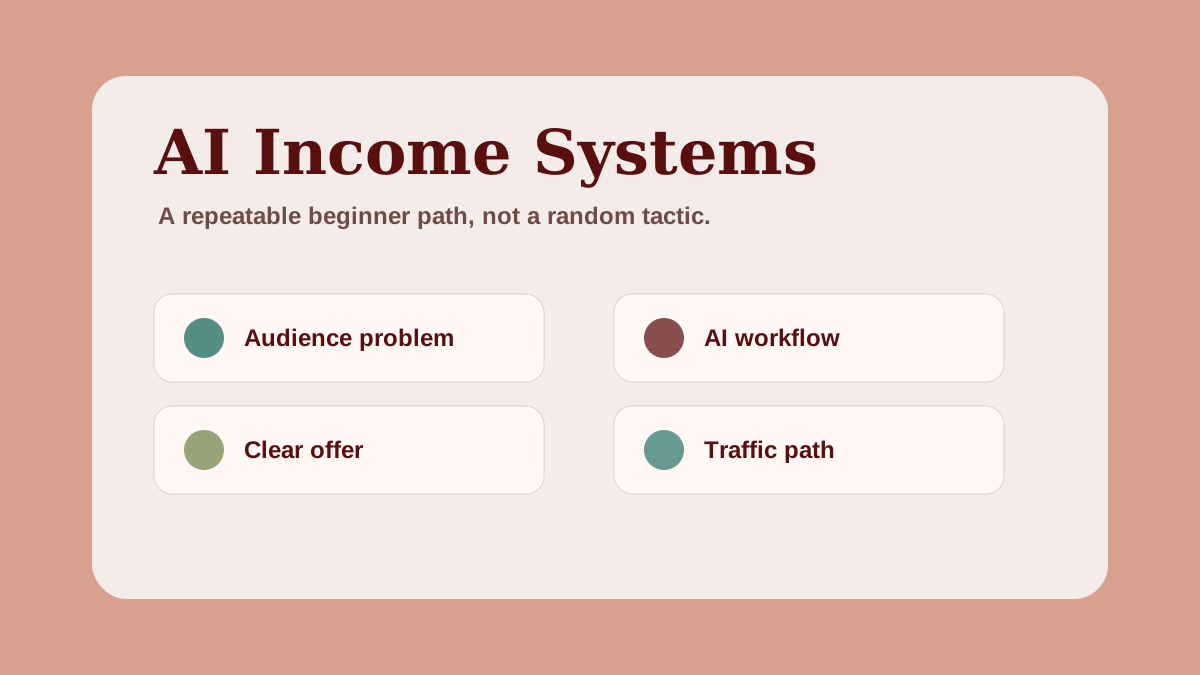
AI income systems are a better way to think about online income with AI than chasing random side hustle ideas.
A side hustle idea tells you what you might do.
A system tells you how the work repeats.
That matters because beginners do not usually fail from a lack of ideas. They fail because the idea never becomes a clear offer, workflow, delivery process, and traffic path.
Quick answer: what is an AI income system?
An AI income system is a repeatable setup that connects an audience, a useful offer, an AI-assisted workflow, a delivery format, and a traffic or outreach path. The goal is not to make AI sound magical. The goal is to build a simple process that creates a useful result for a specific person.
For AIExecutionHub, the best beginner systems are educational, practical, and realistic. They avoid fake urgency and focus on skills that compound: research, content planning, prompt workflows, publishing, and resource creation.
AI side hustle vs AI income system
These terms are related, but they are not the same.
| Concept | Meaning | Beginner example |
|---|---|---|
| AI side hustle | A broad way to earn with AI support | AI-assisted content planning |
| AI income system | The repeatable process behind the offer | Create a 30-day content plan using a fixed research, outline, and review workflow |
| AI workflow | The steps used to produce the deliverable | Prompt chain, spreadsheet, editing checklist |
| Traffic path | How people discover the offer | Pinterest, blog SEO, outreach, communities |
The system is what makes the idea easier to execute.
The four parts of a beginner AI income system
Every simple AI income system needs four parts.
1. Audience
You need to know who the work is for.
"Creators" is broad. "Beginner Pinterest bloggers who need weekly pin titles" is clearer.
The more specific the audience, the easier it is to understand their problem and create a useful deliverable.
2. Offer
The offer should be easy to explain.
Examples:
- 30-day AI-assisted content plan
- Pinterest pin title and description pack
- AI prompt workflow checklist
- blog outline and keyword map
- beginner productivity workflow template
Avoid vague offers like "AI growth strategy" when you are starting. Beginners usually need a smaller promise.
3. Workflow
The workflow is the engine. It explains how the deliverable gets made.
A Pinterest title pack workflow might look like this:
- Read the article or topic.
- Identify the reader problem.
- Generate title angles with AI.
- Remove vague or exaggerated titles.
- Group titles by intent.
- Write descriptions.
- Add final quality checks.
Now the offer can repeat.
4. Traffic or outreach path
People need to discover the offer.
For beginners, the best paths are often simple:
- publish useful blog articles
- create Pinterest pins for those articles
- share helpful answers in communities
- send direct outreach with a sample
- link resources together on your site
The path does not need to be complicated. It needs to be consistent.
Example system: Pinterest + blog content planner
This is a strong beginner system because the deliverable is clear and useful.
Audience:
Beginner bloggers, educators, or creators with existing blog topics.
Offer:
"I turn one blog post into five Pinterest pin title angles, five descriptions, and a simple weekly posting plan."
Workflow:
- Identify the article promise.
- Pull out main sections.
- Turn each section into a pin angle.
- Write searchable titles.
- Draft descriptions.
- Match pins to the article or resource.
- Review for clarity and tone.
Traffic:
Publish articles about Pinterest traffic, AI blogging systems, and content repurposing. Then link naturally to the offer or ebook page.
This fits the Pinterest Traffic Engine for AI Creators cluster.
Example system: prompt workflow pack
Prompt packs can be weak when they are just lists. They become stronger when they help someone complete a job.
Audience:
Freelancers or creators who repeat a specific task.
Offer:
"A prompt workflow for turning rough ideas into a weekly content calendar."
Workflow:
- Clarify audience and goal.
- Generate content themes.
- Expand themes into post ideas.
- Sort ideas by format.
- Create hooks and titles.
- Add a review prompt.
- Save the workflow as a reusable template.
This can connect naturally to the AI prompt library and AI Prompt Workflow Checklist.
How to validate a beginner AI income system
Before building a big product, test whether the system makes sense.
Use this validation checklist:
- Can you explain the offer in one sentence?
- Does the buyer know what they receive?
- Can you create one sample deliverable?
- Can the workflow be repeated?
- Can you show the result without making income claims?
- Do you know where the audience spends time?
If the answer is no, simplify the offer.
The role of content
Content is not only traffic. It is trust.
An article can teach part of the system, show how you think, answer beginner questions, and guide readers to the next step.
For example:
- An article about AI side hustles introduces the opportunity.
- An article about AI workflows explains the process.
- A resource gives the reader something to use.
- An ebook gives the complete roadmap.
That is a cleaner reader journey than sending every visitor straight to a checkout page.
Common mistakes
Avoid these mistakes when building AI income systems:
- choosing a broad niche too early
- copying generic AI output
- offering too many services at once
- selling prompts with no workflow
- promising fast income
- building automations before proving the offer
- ignoring distribution
The best beginner system is usually smaller and clearer than you think. If your starting constraint is capital rather than ideas, the cost-tier breakdown in low-investment AI side hustles shows what each tier can realistically produce on $0, under $50, or under $200 a month.
FAQ about AI income systems
What is an AI income system?
An AI income system is a repeatable setup that connects an audience, useful offer, AI-assisted workflow, delivery format, and traffic or outreach path.
How is an AI income system different from an AI side hustle?
An AI side hustle is the broad idea. An AI income system is the repeatable process behind it, including the buyer, deliverable, workflow, quality checks, and distribution.
Can beginners build AI income systems without an audience?
Beginners can start without a large audience by choosing a specific problem, making one sample deliverable, and using direct outreach or small communities to test whether people understand the offer.
What is the simplest AI income system to start with?
The simplest starting point is usually a planning or research deliverable, such as a content plan, Pinterest title pack, prompt workflow checklist, or niche research brief.
Next step
If you want a structured path from idea to first offer, read First $100 With AI. It connects AI side hustles, workflow systems, and beginner execution into one roadmap. If content is the income engine you're building, pair it with the Ultimate AI Blogging System for the full publishing workflow. For a specific digital product example with low build cost and recurring demand, the AI flashcard side hustle guide shows how to create and sell study decks as a repeatable income system.
Related AI systems
Continue with connected AI workflow guides.
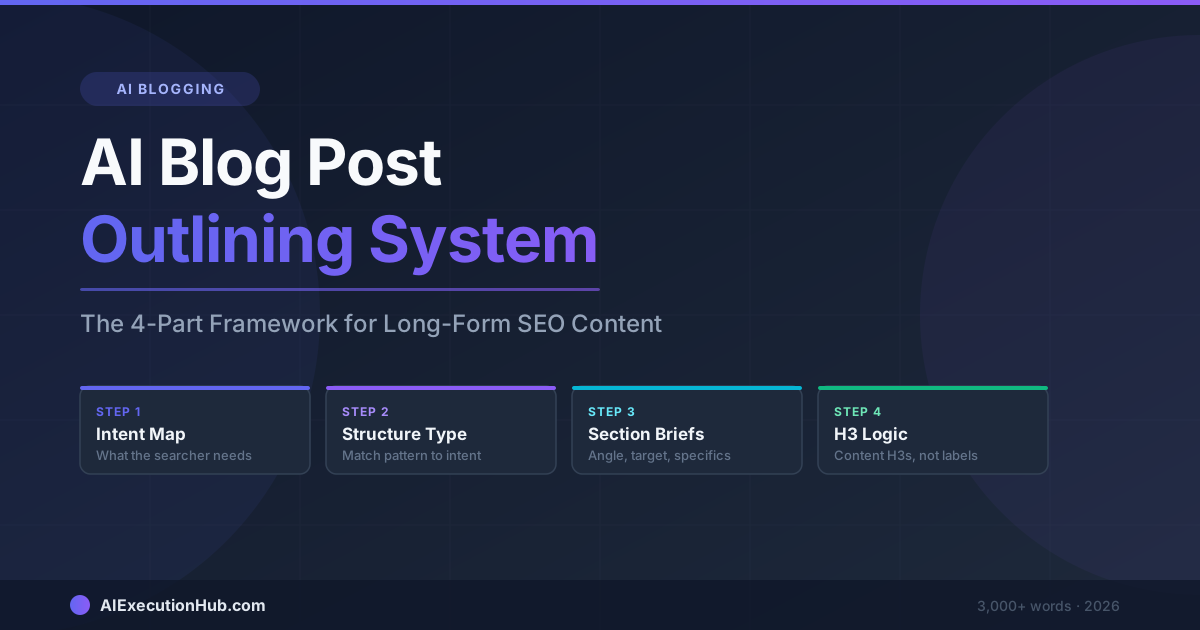
AI Blog Post Outlining System: The 4-Part Framework for Long-Form SEO Content
A practical AI blog post outlining system that structures long-form SEO content before drafting — 4 steps from keyword intent to section briefs that write themselves.
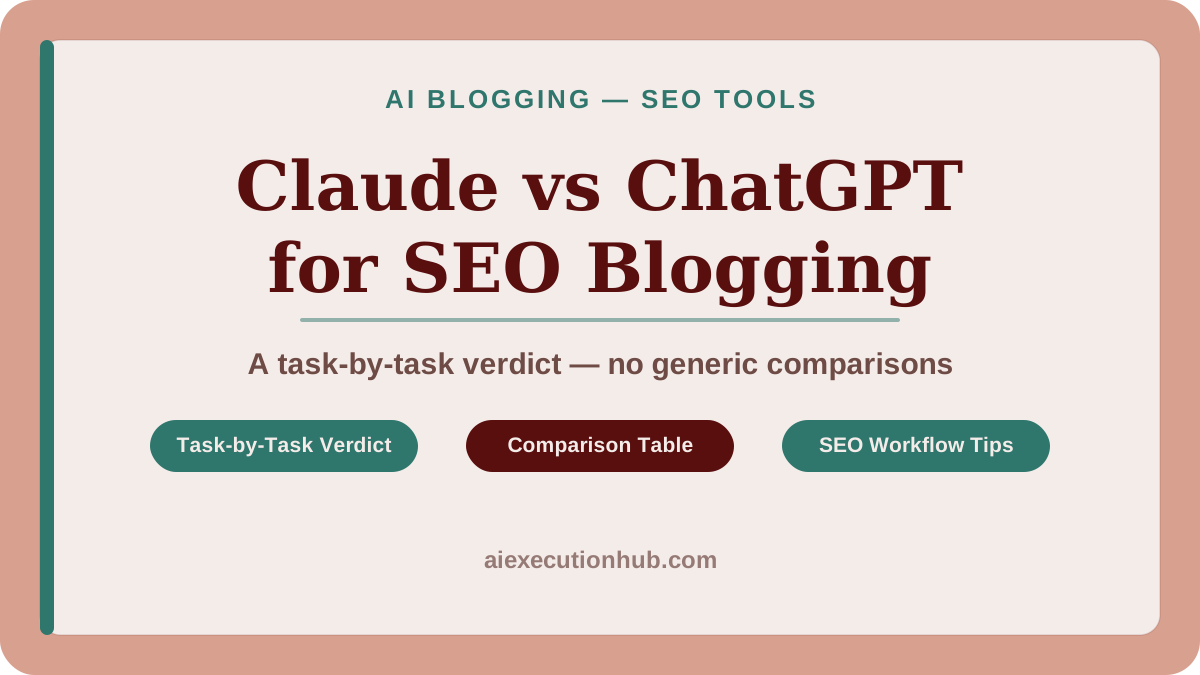
Claude vs ChatGPT for SEO Blogging: A Task-by-Task Verdict
Claude vs ChatGPT for SEO blogging — a task-by-task breakdown of which AI wins for outlines, meta descriptions, tone editing, internal linking, and more.
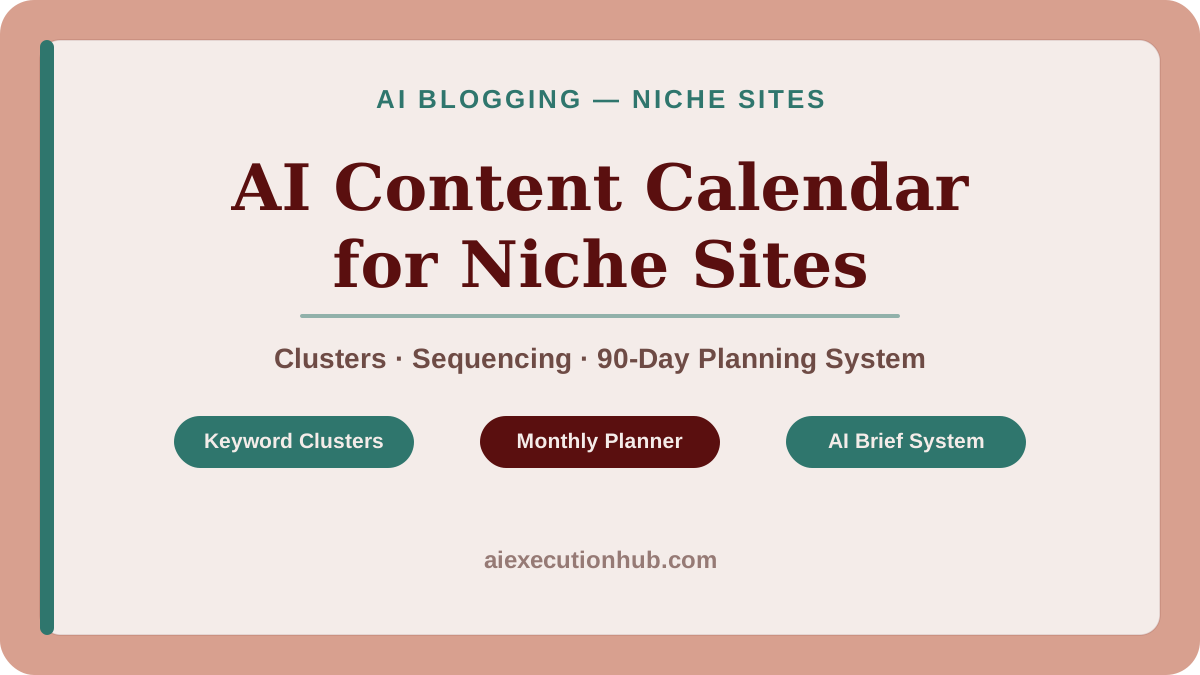
AI Content Calendar for Niche Sites: A Practical Planning System
Build an AI content calendar for your niche site — keyword clustering, publishing cadence, seasonal timing, and a repeatable monthly planning system.