AI Side Hustles
Low-Investment AI Side Hustles: A Practical Guide
A practical 2026 guide to low-investment AI side hustles — cost tiers, realistic timelines, tool stack, workflows, and how to pick one that fits your budget.
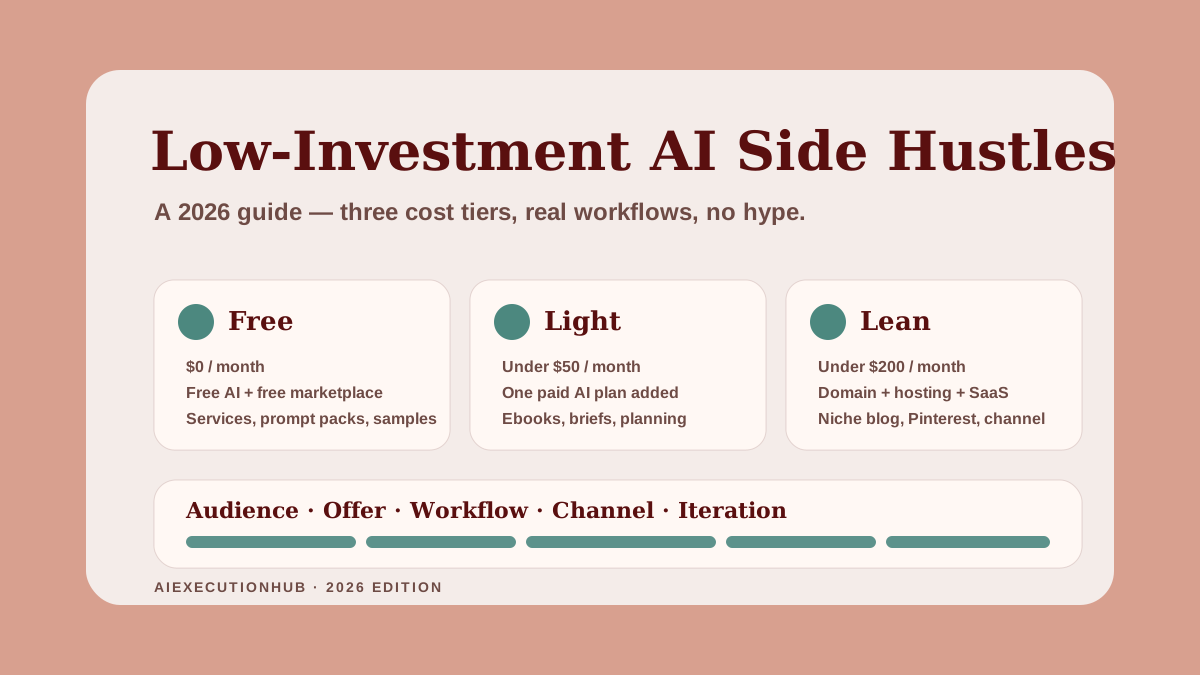
Most "AI side hustle" advice starts with a tool stack. That order is backwards. The question that actually decides whether a beginner makes anything is not "which AI should I use" but "how much money and time can I spend before I see a result."
In 2026, the honest answer for most low-investment AI side hustles is: very little money, more time than the hype suggests, and a clear offer. The tools are cheap or free. The workflow is what does the work.
This guide is a practical map of low-investment AI side hustles — what they actually cost, what they realistically pay, and how to pick one that matches the budget and time you have. It uses three cost tiers (Free, Light, Lean) so you can choose by capital instead of by feature list.
If you are looking for the beginner-experience angle (mindset, first offer, system thinking), the companion pillar is AI side hustles for beginners. This guide is the same problem viewed through cost and risk.
Quick answer: what counts as a low-investment AI side hustle?
A low-investment AI side hustle is any AI-assisted offer that can be launched for under about $200 per month, often for $0, using free or low-cost AI tools, a free marketplace or platform, and a clear, repeatable deliverable. The defining trait is not the AI — it is that you can test the idea, produce real work, and reach a first sale before you commit to paid software or paid traffic.
For most beginners, "low-investment" means a free AI assistant, a free design tool, a free marketplace, time, and patience. The capital risk is small. The thinking risk — choosing a real audience and a useful deliverable — is where the work lives.
Why "low investment" needs an honest definition in 2026
"Low investment" is one of the most over-used phrases in side-hustle content. It usually hides a few things.
First, money is not the only investment. Time is. A "$0 side hustle" that needs three hours a day for six weeks is not free — it just trades cash for hours. A practical guide names both costs.
Second, risk is rarely discussed. Low money plus low time often means low predictability. That is fine for a side hustle. It is not fine if you expect rent money next week.
Third, the AI tooling that matters at the beginner level is mostly free or cheap. The expensive part of online income in 2026 is not the tools — it is attention, trust, and consistency. None of those are bought with a subscription.
Holding all that together, "low investment" in this guide means three things at once: under about $200 per month in cash, under about 10 hours per week in time, and a deliverable that does not require an audience you do not have.
The three cost tiers of AI side hustles
Most beginner advice flattens "low cost" into one bucket. That makes it hard to choose. A tier-based view is more useful.
Tier 1 — Free ($0/month)
What you have: a free AI assistant, a free design tool, a free marketplace or hosting account, and your existing devices and internet.
What it pays for: small services, small digital products, content experiments. No paid traffic. No paid scheduling. No premium AI features.
Who it fits: beginners testing the idea, students, anyone who needs to confirm the offer works before paying for anything.
Trade-off: slower outputs, more rate limits, less polish — solved by patience and clearer thinking.
Tier 2 — Light (under $50/month)
What you add: one paid AI subscription (the assistant you actually use most), or one paid design tool, or one paid scheduler. Pick one — not all three.
What it pays for: faster production, fewer feature limits, better templates. Lets you run a small service or store consistently.
Who it fits: anyone who has produced a few deliverables on Tier 1 and is now hitting a clear bottleneck.
Trade-off: still no real infrastructure. If the offer is wrong, the paid tool will not save it.
Tier 3 — Lean (under $200/month)
What you add: a domain, low-cost hosting (or a static site), one or two paid SaaS tools (scheduler, email tool, analytics), maybe a small marketplace fee or paid plugin.
What it pays for: a real owned asset — a website, an email list, a content pipeline — that compounds. This is the tier where blog/Pinterest/email-driven income systems make sense.
Who it fits: anyone who has confirmed demand at Tier 1 or Tier 2 and is ready to build something durable.
Trade-off: the bills are still small, but they are recurring. The expectation should be reinvestment, not profit, for the first few months.
What every tier shares
Across all three tiers, the parts that move the needle are the same:
- A specific audience you can describe in one sentence
- A deliverable a stranger could buy without asking you to explain
- A repeatable AI workflow (prompt → draft → human edit → deliver)
- One distribution channel you can actually post to
- A way to be reached (email, marketplace inbox, DM)
Notice what is missing: no big tool stack, no logo, no LLC, no funnel. Those come later, if ever.
Eight low-investment AI side hustles compared
The table below is a starting map — not a ranking. The "right" hustle depends on your time, your interests, and what you can credibly deliver this month.
| # | Hustle | Tier | Capital needed | First-result window | Income ceiling | Effort profile |
|---|---|---|---|---|---|---|
| 1 | AI-assisted freelance gigs (writing, editing, research) | Free | $0 | 1–3 weeks | Capped by hours | Active |
| 2 | AI prompt packs for a specific workflow | Free / Light | $0–$20 | 2–4 weeks | Compounds slowly | Front-loaded |
| 3 | Short AI-assisted ebooks on a narrow topic | Light | $0–$30 | 2–6 weeks | Compounds | Front-loaded |
| 4 | AI content planning for creators (briefs, calendars) | Free / Light | $0–$30 | 1–3 weeks | Capped by hours | Active |
| 5 | AI research briefs for businesses or creators | Free / Light | $0–$30 | 2–4 weeks | Mid | Active |
| 6 | Niche AI-assisted blog (display ads / affiliate) | Lean | $50–$180 | 8–12 weeks | High but slow | Compounding |
| 7 | Pinterest + AI traffic engine pointing to digital products | Lean | $50–$120 | 6–10 weeks | High but slow | Compounding |
| 8 | AI-narrated faceless content channel (audio, slideshow, repurposed) | Light / Lean | $20–$120 | 6–12 weeks | Variable | Compounding |
A useful way to read this table: services give you cash fast and a ceiling, products and content give you slower starts and a higher ceiling. Many people start with #1 or #4 to fund #3, #6, or #7. That is a sensible order.
1. AI-assisted freelance gigs
The fastest low-investment route. A free marketplace account (Fiverr, Upwork, a community job board) plus a free AI assistant is enough. Gigs that work well at this tier: resume rewrites, LinkedIn bios, short-form copy, simple research summaries, blog outlines, email drafts.
Cost: $0. Time: 5–10 hours/week. Risk: low. Ceiling: capped by your hours.
2. AI prompt packs
A small, focused prompt pack tied to one workflow (Pinterest titles, blog outlines, client onboarding emails, research briefs) can be sold on Gumroad, Etsy, or a simple Stan-style page. Free-tier AI is enough to build it.
Another strong digital product angle in this tier is AI-generated flashcard decks for exam prep or language learning — the AI flashcard side hustle covers the full workflow for creating and selling study decks on Etsy and Gumroad.
Cost: $0 (free Gumroad) or $20 if you add a paid AI plan. Time: front-loaded, then mostly maintenance. Risk: low — the product exists once you build it.
3. Short AI-assisted ebooks
A 30–80 page beginner ebook on a narrow, specific topic — written with AI assistance and edited by a human — is one of the most accessible low-investment products. The First $100 With AI ebook is an example of the format.
Cost: $0–$30. Time: 2–4 weeks part-time. Risk: low if the topic is specific.
4. AI content planning for creators
Selling a 30-day content plan, a Pinterest title pack, or a weekly content calendar to a creator who already has an audience. The AI does the heavy drafting; you choose the angles, edit, and package.
Cost: $0–$30. Time: 4–8 hours per client per month. Risk: low. Ceiling: capped by clients.
5. AI research briefs
Businesses, agencies, and creators pay for organized research they do not have time to produce. A simple AI-assisted research brief — sources, summaries, decisions, recommendations — sells well as a $50–$200 deliverable.
Cost: $0–$30. Time: 2–6 hours per brief. Risk: low. Ceiling: mid — capped by hours, but per-deliverable price is higher than gig work.
6. Niche AI-assisted blog
This is the classic compounding hustle. A static blog (Next.js, WordPress, or any low-cost stack), monetized through ads, affiliate links, or your own digital products. The system behind it — keyword research, briefs, AI-assisted drafts, human editing, internal linking, refresh — is covered in the ultimate AI blogging system for 2026.
Cost: $50–$180 / month at Lean tier (domain, hosting, one or two SaaS tools). Time: 6–12 hours/week. Risk: medium — months of work before meaningful traffic. Ceiling: high.
7. Pinterest + AI traffic engine
Pinterest behaves like a visual search engine, which makes it well suited to AI-assisted content. A working setup is described in the Pinterest Traffic Engine for AI creators. Pinterest plus an ebook, a blog, or an affiliate offer is one of the most realistic low-investment systems for someone who likes content over client work.
Cost: $0–$120 / month. Time: 5–10 hours/week. Risk: medium — slow start. Ceiling: high.
8. AI-narrated faceless channel
YouTube, TikTok, or a podcast where AI assists with scripting and (where it makes sense) narration. The hustle works when the channel has a specific topical focus and a clear off-platform destination (newsletter, ebook, affiliate).
Cost: $20–$120 / month. Time: 6–10 hours/week. Risk: medium — algorithm-dependent. Ceiling: variable.
Step-by-step workflow: pick, validate, and launch in 14 days
The point of this workflow is to keep total investment low while testing whether the offer is real. Days are guidelines, not deadlines.
Day 1–2: Choose one hustle and one audience
Pick a single hustle from the table above. Pair it with a specific audience: not "creators", but "beginner Pinterest creators in the home-decor niche" or "solo coaches who run weekly email newsletters."
If you cannot name the audience in one sentence, the offer is too broad.
Day 3–4: Design the deliverable
Write a one-paragraph description of what the buyer receives. Make it boring and concrete. "A 30-day Pinterest title pack: 90 pin titles across three boards, with matching descriptions, delivered as a Google Doc."
A boring description sells. A vague one does not.
Day 5–7: Build the AI workflow
Decide the steps your AI assistant will help with: research, outline, draft, polish, format. Save the prompts you actually use — these become a reusable workflow. The AI prompt workflow checklist is a useful template at this stage.
Day 8–9: Produce one sample
Make one real deliverable end-to-end. Not a draft. A finished version you would actually hand to a buyer.
This step exposes weak offers faster than any market research can.
Day 10–11: Place the offer
Free path: Gumroad page, Fiverr gig, a pinned post in one community, a short Pinterest carousel, or a single landing-page section on a free site.
Light path: add one paid AI subscription to remove a real bottleneck, not because the page looks better.
Day 12–14: Push for the first signal
Share the offer in three to five places where the audience already is — niche subreddits, small Discord servers, Facebook groups, your own newsletter, or your Pinterest boards. Look for replies, saves, clicks, and one conversation that turns into a sale or a clear "no, because…"
That signal is more valuable than the first sale.
Tool stack by tier
The right tools at each tier are the ones you would already pick anyway. Do not chase shiny new tools — chase the ones the hustle needs.
| Function | Tier 1 (Free) | Tier 2 (Light, under $50) | Tier 3 (Lean, under $200) |
|---|---|---|---|
| AI assistant | Free tier of a general AI chat tool | One paid AI plan you actually use | The same paid AI plan + an alternative for research |
| Design | Free Canva, free image editor | Paid Canva or equivalent | Paid Canva + one stock asset subscription |
| Marketplace / hosting | Free Gumroad, free Fiverr, free Stan store | Same + custom Gumroad domain | Owned domain + low-cost static hosting |
| Scheduler | Native Pinterest scheduler, native social schedulers | One light scheduler (free tier) | One paid scheduler or content tool |
| None at first | Free email tool (limited) | Free or low-cost email tool, list <500 | |
| Analytics | Free built-in marketplace analytics | Same + free Search Console | Search Console + a lightweight analytics tool |
A practical rule: every tool you add should remove a specific bottleneck you can name. "It looks nicer" is not a bottleneck.
Realistic cost & breakeven math
If you spend $0 and earn $50, you broke even on cash and learned what works. That is a strong outcome at the start, even if it is not exciting.
If you spend $40/month at Tier 2, breakeven means one or two small sales per month — completely realistic for a focused service or a $20 product with three or four buyers.
If you spend $150/month at Tier 3, breakeven sits higher: a steady trickle of ad/affiliate revenue, a few product sales, or one returning client. That is achievable, but expect it to take two to six months — not two weeks.
The point of this math is not optimism. It is to make the bar visible. "Profit" is not the right metric at the start. "Did I learn whether this offer works?" is.
Pre-launch checklist (copy-paste)
Use this list before you launch any low-investment AI side hustle:
- I can name the audience in one sentence.
- I can describe the deliverable a stranger could buy without asking me to explain it.
- I have made one real sample end-to-end.
- The deliverable does not depend on an audience I do not have.
- I have a free or low-cost marketplace, page, or DM channel to receive the order.
- I have a save-able workflow (notes, prompts, steps) so the second order is easier than the first.
- I have a small list (3–5 places) where my audience already spends time.
- I have a plan for the first message I will send when someone replies.
- I have a price that beginners can say yes to without thinking.
- I know which paid tool, if any, I would add after the first sale.
If two or more items are missing, postpone launch by a few days and finish them. Most low-investment hustles fail on these, not on tools.
Common mistakes that stall low-investment AI side hustles
A few patterns are worth naming, because they account for most stalls at this tier.
Tool sprawl. Six free trials open at once, nothing finished. Pick one assistant, one design tool, one marketplace.
Generic AI output. "Write me a blog post about productivity" is not a workflow. Specific prompts, briefs, and human edits produce sellable output. Generic prompts produce noise.
No audience. A perfect product that points at "everyone" sells to no one. Name the buyer in one sentence before building anything.
Skipping the sample. Selling something you have not actually made once is a fast way to underprice, overpromise, and disappoint.
Buying tools to feel productive. A paid subscription will not make the offer clearer. It just makes the bank statement worse.
Confusing channels with offers. "I'll start a TikTok" is not an offer. "I help X audience get Y result, posted on TikTok" is.
Quitting in week three. Most low-investment hustles are not broken at week three — they are early.
Example: a 14-day, $0 launch
A realistic worked example, using AI content planning as the hustle.
- Day 1–2: Pick the audience. "Beginner Pinterest creators in the home-decor niche who post weekly." Write it on a sticky note.
- Day 3–4: Design the deliverable. A "30-day home-decor Pinterest plan": 30 pin titles, 30 short descriptions, three board ideas, one weekly schedule. Delivered as a Google Doc.
- Day 5–7: Build the workflow. Open a free AI assistant. Write five prompts: keyword brainstorm, board map, title batch, description batch, weekly schedule. Save them in a doc.
- Day 8–9: Produce one sample. Pick a real (or sample) home-decor topic. Run the full workflow end-to-end. Edit the output. Produce the final Google Doc.
- Day 10–11: Set up the offer. Free Gumroad page, $19 price. Title: "30-Day Home-Decor Pinterest Plan." Description: what the buyer receives, in three short paragraphs.
- Day 12–14: Push the offer. Share it in two small home-decor Facebook groups, one Reddit thread answering a real question, one Pinterest pin pointing to the Gumroad page, and one DM to a creator you actually follow.
Cost: $0. Time: 8–12 hours total across two weeks. Outcome to expect: either a first sale, two or three conversations that improve the offer, or a clear signal that the audience or angle is wrong.
That is what a low-investment AI side hustle looks like when it is done with the system in front of the tools.
FAQ about low-investment AI side hustles
Can you start an AI side hustle with no money?
Yes. Several AI side hustles can be launched on free tiers alone — a free ChatGPT account, a free design tool, a free Gumroad or Fiverr account, and your existing internet connection. The constraint at $0 is time and patience, not features. Paid tools become useful only after you have made your first few sales.
How much does it cost to start an AI side hustle in 2026?
Starting costs range from $0 to about $200 per month depending on the model. A truly free path uses only free AI, design, and marketplace accounts. A light setup adds one paid AI subscription. A lean setup adds a domain, basic hosting, and a paid scheduling or analytics tool when traffic justifies it.
What is the cheapest AI side hustle to start?
The cheapest AI side hustles are service offers and small digital products that route through existing marketplaces. AI-assisted freelance gigs, prompt packs, content plans, research briefs, and short ebooks can all be launched with no website and no paid tooling, using free AI and free marketplace accounts.
Are free AI tools enough to make money?
For beginner-scale work, yes. Free tiers of common AI assistants, free design tools, and free marketplaces can produce real deliverables and real sales. Paid tools mainly buy speed, higher rate limits, and convenience — not better ideas. Upgrade only when a paid feature is the bottleneck.
Which low-investment AI side hustle is most profitable?
There is no universal winner. Service-style hustles (freelance gigs, content planning, research briefs) reach the first $100 fastest but cap on time. Digital products and content-driven hustles (ebooks, niche blogs, AI-narrated channels) start slower but compound. A practical answer: start with a service to fund a product.
How long until a low-investment AI side hustle pays off?
Service-style hustles can produce a first sale in one to three weeks of consistent effort. Digital products typically take two to six weeks. Content-driven hustles (blog, Pinterest, faceless channels) usually need eight to twelve weeks before saves, views, or clicks stabilize. None of these are guaranteed — they are realistic, not promised.
Do low-investment AI side hustles still work in 2026?
Yes, but the bar has moved. Generic AI output is everywhere, so low-investment hustles win on specificity — a clear audience, a useful deliverable, and a workflow that gets the result right. The cost stays low. The thinking has to be sharper than it was two years ago.
Should I pay for AI tools before earning anything?
Generally no. Free tiers are enough to test the offer, produce the first deliverable, and confirm that someone will pay. Upgrade to a paid AI plan after the first one or two sales, when you can point to a specific limit you are hitting — not before.
Next step
Low investment is the easy part in 2026. The hard part is the offer — who it is for, what it delivers, and why a stranger would pay for it without explanation.
If you want the full beginner roadmap behind the hustles in this guide — including offer design, AI workflows, traffic, and the path from zero to first paying buyer — the First $100 With AI ebook is the system this site is built around. It is the complete First $100 With AI system, written for beginners, not gurus.
From here, two useful next reads:
- AI side hustles for beginners — the same problem viewed through beginner experience and system thinking instead of cost.
- AI income systems for beginners — how to turn any of the hustles above into a repeatable workflow instead of a one-off attempt.
You can also pair this guide with the AI Side Hustle Idea Map to pick the angle that fits your time and capital, and the AI prompt workflow checklist to build the workflow behind it. The prompt library has the offer-builder and content-map prompts referenced throughout this guide.
Pick one hustle. One audience. One sample. The investment stays low. The work compounds when the system shows up.
Related AI systems
Continue with connected AI workflow guides.
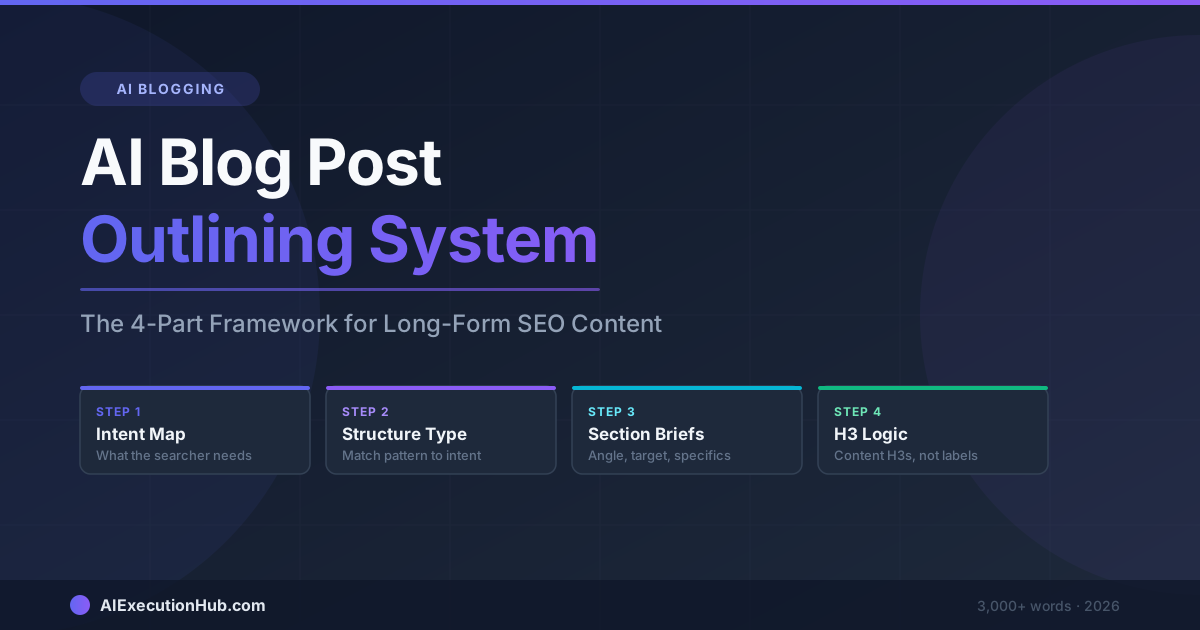
AI Blog Post Outlining System: The 4-Part Framework for Long-Form SEO Content
A practical AI blog post outlining system that structures long-form SEO content before drafting — 4 steps from keyword intent to section briefs that write themselves.
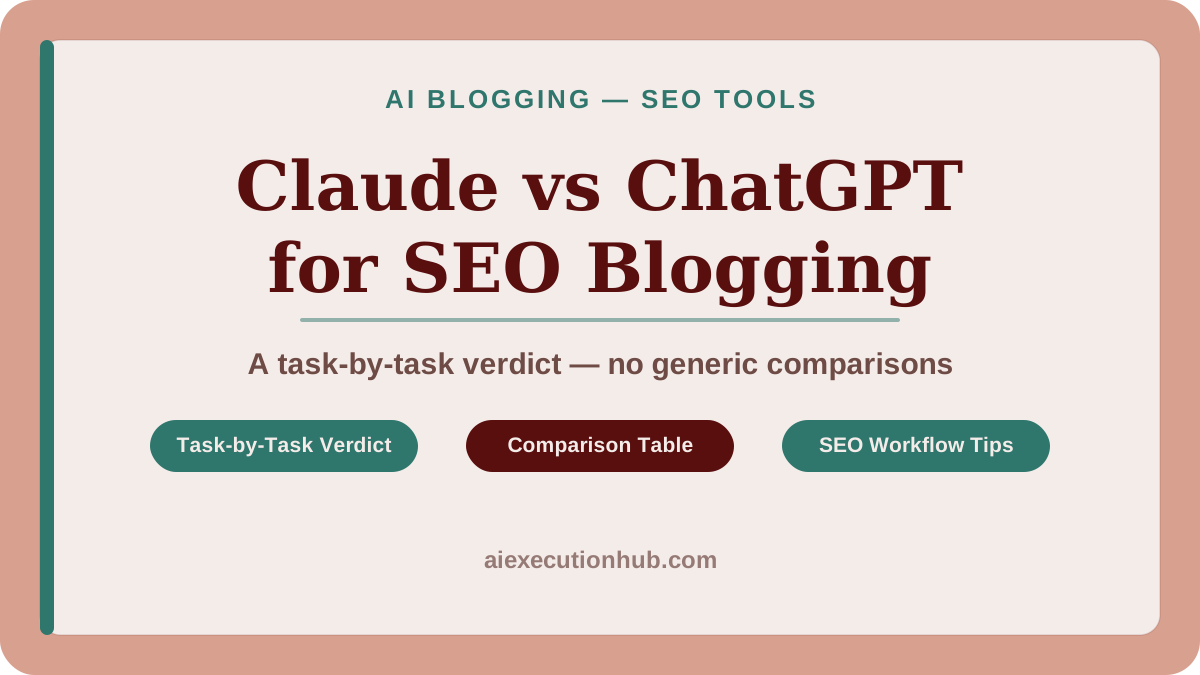
Claude vs ChatGPT for SEO Blogging: A Task-by-Task Verdict
Claude vs ChatGPT for SEO blogging — a task-by-task breakdown of which AI wins for outlines, meta descriptions, tone editing, internal linking, and more.
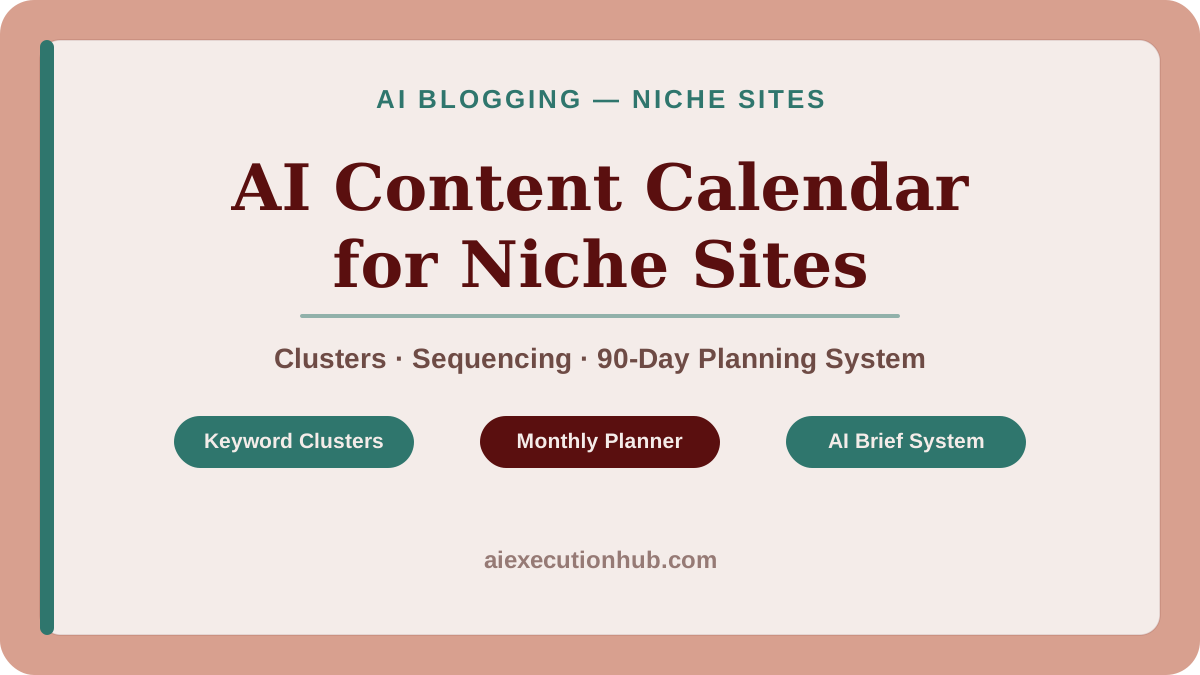
AI Content Calendar for Niche Sites: A Practical Planning System
Build an AI content calendar for your niche site — keyword clustering, publishing cadence, seasonal timing, and a repeatable monthly planning system.