AI Execution Systems
AI Execution Systems: What They Are and How Beginners Build Them
A beginner-friendly guide to AI execution systems, including how to turn AI ideas into repeatable workflows, content, resources, and practical outcomes.
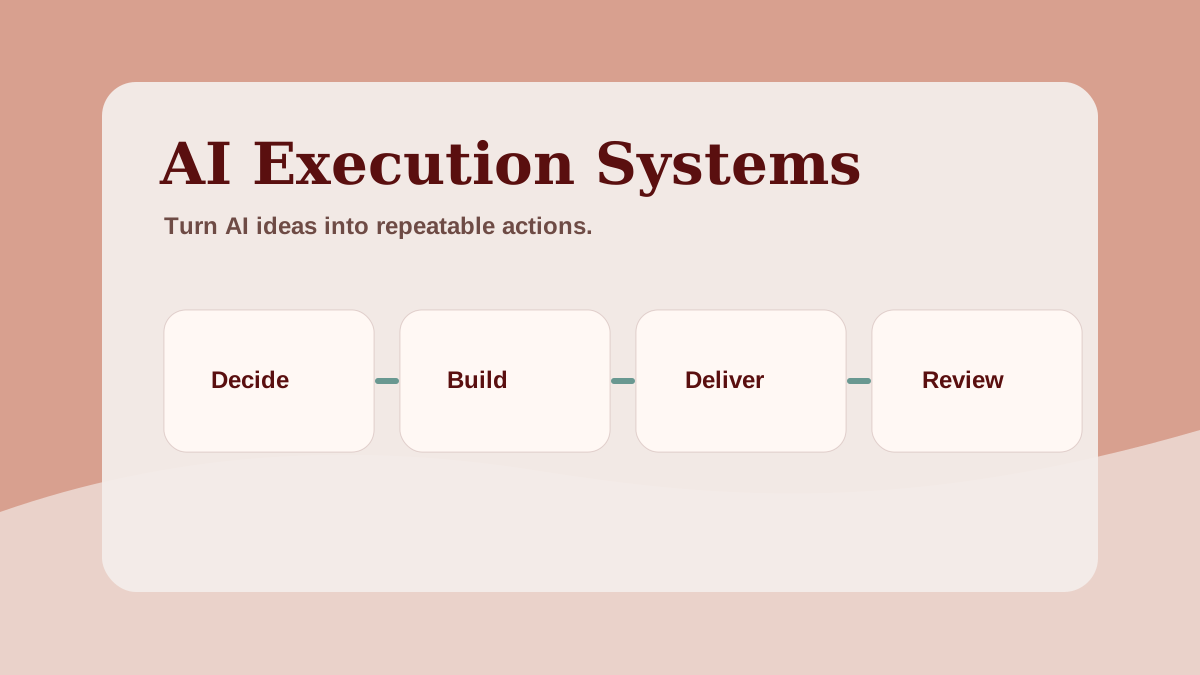
AI execution systems are the difference between collecting AI ideas and actually using them.
Beginners often have enough inspiration. They have saved posts, tool lists, prompt examples, side hustle ideas, and video tutorials. What they do not have is a practical system for choosing one direction and finishing useful work.
An execution system solves that.
Quick answer: what is an AI execution system?
An AI execution system is a repeatable framework for turning AI ideas into useful actions, deliverables, publishing routines, review steps, and improvements. It helps beginners move from "I could do this" to "Here is the next step, the workflow, and the output."
AIExecutionHub uses this phrase deliberately because execution is the missing layer in most AI education. A prompt is useful. A tool is useful. But a system is what helps beginners keep going.
The execution problem
AI tools can produce a lot of output quickly. That is helpful, but it can also create clutter.
Without a system, beginners might:
- generate too many ideas
- start several projects
- publish generic content
- save prompts without using them
- switch tools constantly
- avoid quality checks
- never create a clear offer or resource
The issue is not motivation. The issue is missing structure.
The four-part AI execution system
A simple AI execution system has four parts.
| Part | Purpose | Example |
|---|---|---|
| Decide | Choose one direction | Pinterest + blog workflow |
| Build | Create the process | Prompt chain and checklist |
| Deliver | Produce something useful | Article, pin plan, resource, offer |
| Review | Improve the system | Check clicks, quality, friction |
This structure works for content, resources, productivity, prompt packs, and beginner AI side hustles.
Part 1: Decide
Execution starts with a decision.
For beginners, the decision should be narrow. Do not try to build an AI business, YouTube channel, blog, prompt shop, and productivity system at the same time.
Choose one path:
- AI blogging
- Pinterest traffic
- prompt workflow packs
- AI content planning
- research briefs
- productivity templates
Then choose one audience.
Example:
"Beginner bloggers who want to turn articles into Pinterest content."
That is much easier to execute than "people interested in AI."
Part 2: Build
Building means turning the idea into a workflow.
For a Pinterest and blog system, the workflow might include:
- Choose one article topic.
- Define the reader problem.
- Build an outline.
- Draft and edit the article.
- Create five pin title angles.
- Write pin descriptions.
- Link to a resource or ebook.
- Review performance.
This is a system because it can repeat.
If you are building content workflows, read the AI content workflow guide.
Part 3: Deliver
Execution needs output.
The output might be:
- a blog article
- a Pinterest pin set
- a prompt workflow
- a checklist
- a client-ready research brief
- an ebook section
- a resource page
This is where AI can help with speed, but human judgment still matters. Before publishing or delivering, check:
- Is the output accurate?
- Is it specific?
- Is it useful for the reader?
- Does it match the promise?
- Does it avoid hype?
- Does it have a logical next step?
If the output fails those checks, improve it before moving on.
Part 4: Review
A system improves only if you review it.
Review does not need to be complicated. Once a week, ask:
- What did I finish?
- What got stuck?
- Which prompt worked best?
- Which section needed the most editing?
- Which page or pin received attention?
- What should become a template?
This is how beginners develop skill. The review step turns AI from a novelty into a practice.
Example: AI blog execution system
Here is a simple AI blog system:
- Pick one long-tail keyword.
- Define the search intent.
- Create a human-approved outline.
- Draft one section at a time.
- Add examples and internal links.
- Create a thumbnail and alt text.
- Add FAQ schema.
- Create Pinterest pin titles.
- Link to a relevant resource.
- Review performance after publishing.
This system supports SEO, Pinterest, and reader trust.
Example: prompt workflow execution system
Here is a prompt product system:
- Choose one repeated task.
- Map the steps manually.
- Write a prompt for each step.
- Add input instructions.
- Add quality checks.
- Test the workflow on a real example.
- Package it as a checklist or template.
- Link it to an article that explains the problem.
This is stronger than selling disconnected prompts because it teaches a process.
What beginners should avoid
Avoid these execution traps:
- building a large system before testing a small one
- making the workflow too technical
- automating weak content
- publishing AI output without editing
- changing niches every week
- chasing tools instead of outputs
Small systems are easier to finish. Finished systems are easier to improve.
FAQ about AI execution systems
What is an AI execution system?
An AI execution system is a repeatable framework for turning AI ideas into useful actions, deliverables, publishing routines, review steps, and improvements.
Why do beginners need AI execution systems?
Beginners need AI execution systems because AI tools can create many outputs quickly, but a system helps decide what to make, how to check it, where to publish it, and how to improve it.
What are examples of AI execution systems?
Examples include an AI content workflow, Pinterest and blog traffic system, prompt workflow system, research brief workflow, and beginner offer-building system.
How do I build my first AI execution system?
Start with one repeated task, define the input and output, write the prompt sequence, add a human review checklist, and save the process as a reusable template.
Next step
Start with one system. If your goal is online income with AI, use the AI income systems guide next, then connect it to First $100 With AI. If content is your first execution layer, the AI blogging system is the most complete starter framework.
Related AI systems
Continue with connected AI workflow guides.
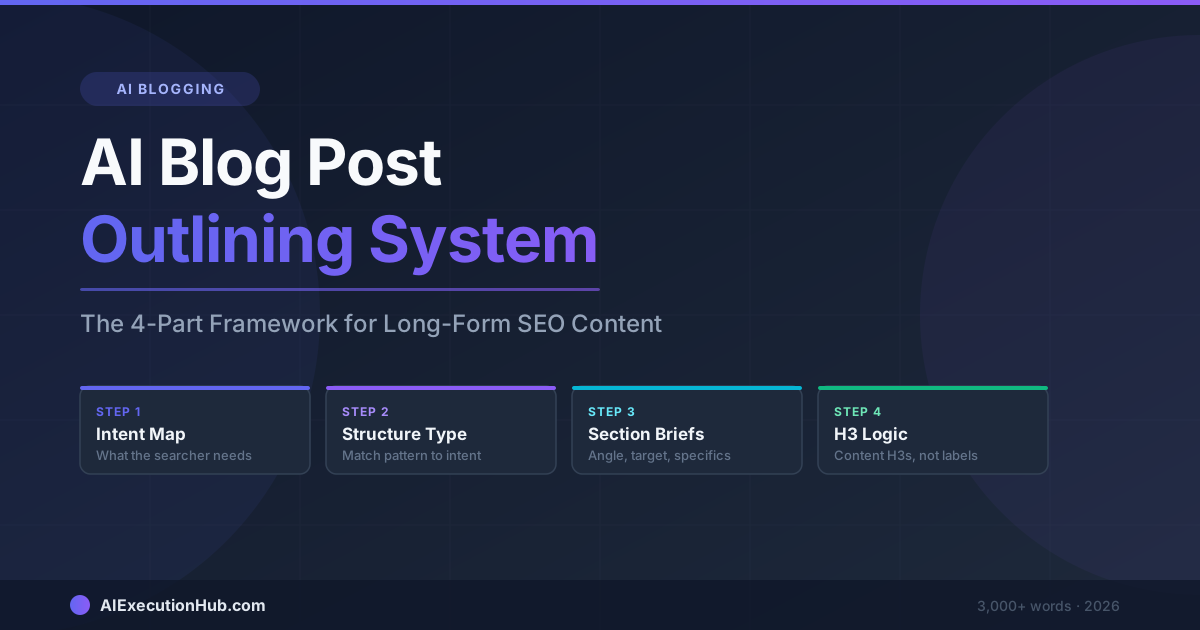
AI Blog Post Outlining System: The 4-Part Framework for Long-Form SEO Content
A practical AI blog post outlining system that structures long-form SEO content before drafting — 4 steps from keyword intent to section briefs that write themselves.
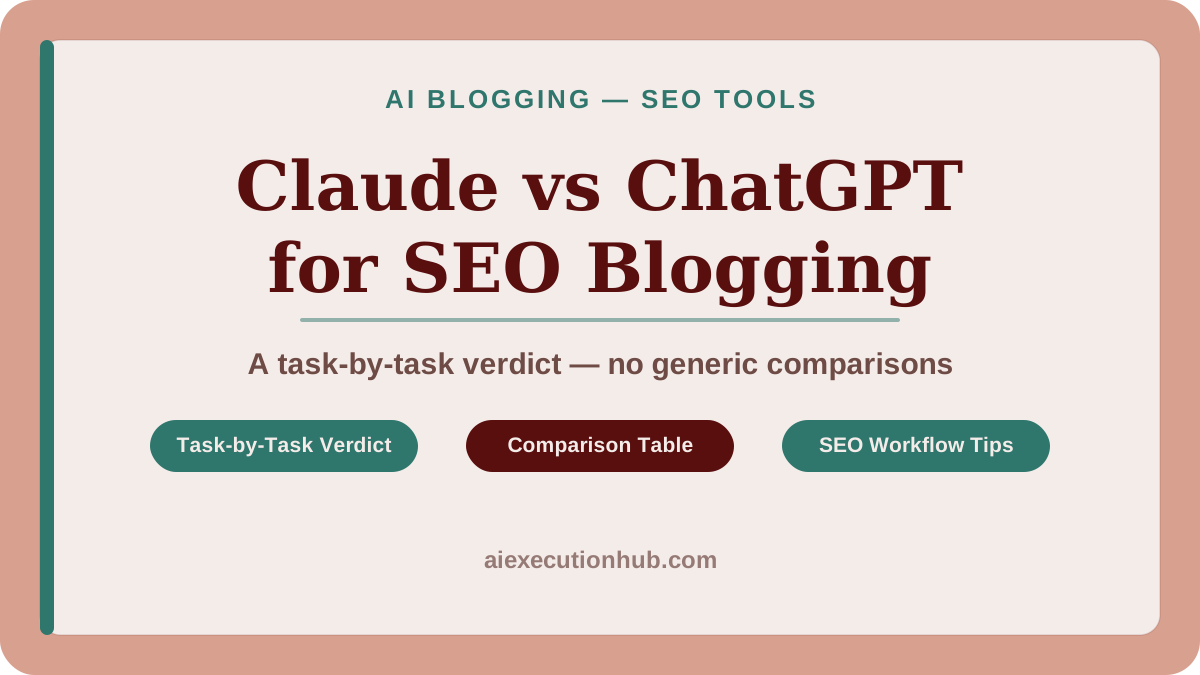
Claude vs ChatGPT for SEO Blogging: A Task-by-Task Verdict
Claude vs ChatGPT for SEO blogging — a task-by-task breakdown of which AI wins for outlines, meta descriptions, tone editing, internal linking, and more.
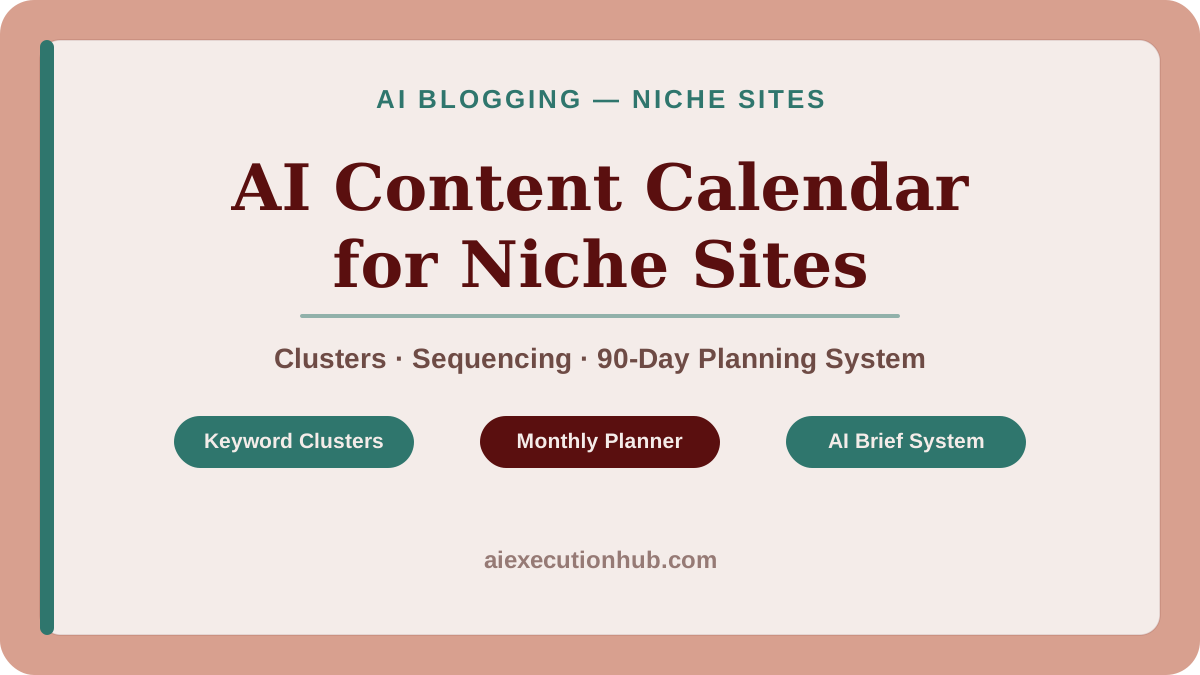
AI Content Calendar for Niche Sites: A Practical Planning System
Build an AI content calendar for your niche site — keyword clustering, publishing cadence, seasonal timing, and a repeatable monthly planning system.