AI Income Systems
How to Make Your First $100 from AI: An Honest Guide for Beginners
Learn exactly how to make your first $100 from AI with 4 realistic methods, honest timelines, and a step-by-step plan for beginners. No hype.
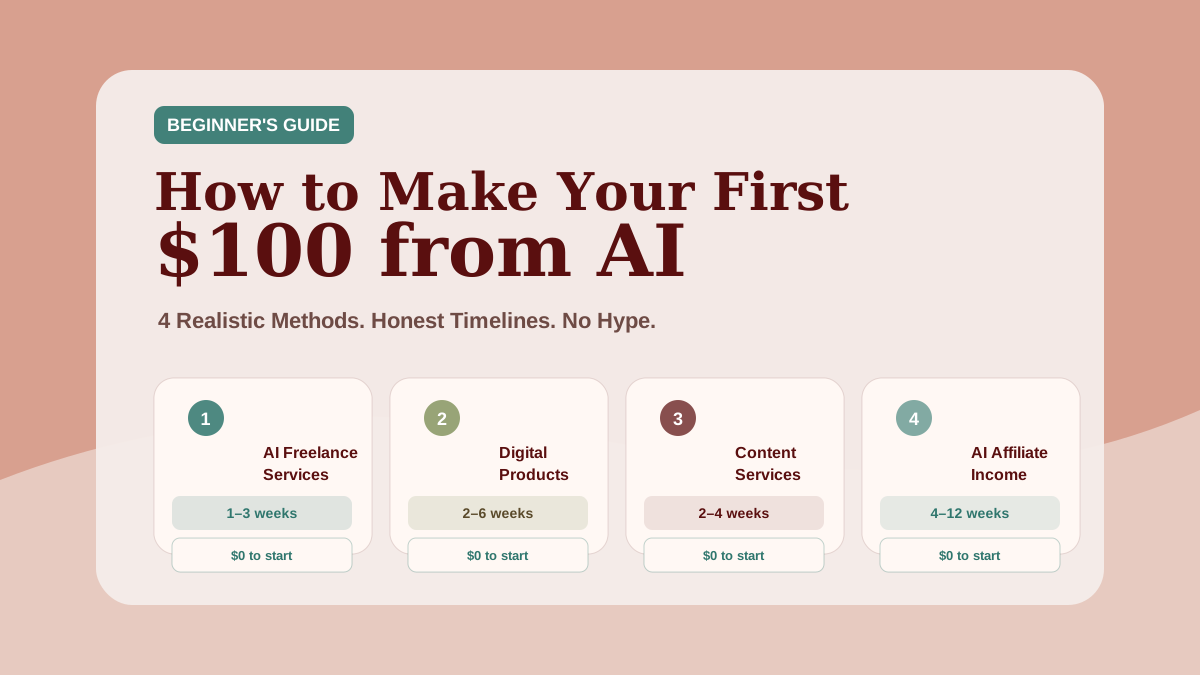
Everyone and their cousin seems to be making money with AI these days. If you've spent any time on YouTube Shorts or Twitter, you've seen the thumbnails — '$10,000 in 30 days with ChatGPT!' and 'I quit my job using AI!' And if you're like most beginners, you've clicked a few of them, felt excited, then confused, then vaguely cheated.
This guide is different. Not because I'm going to promise you'll make $100 in 24 hours — I won't. But because I'm going to give you a realistic, tested framework that actually gets you from zero to that first $100, without the noise.
There are exactly four methods worth your time as a complete beginner. I've ranked them by how fast they realistically get you to $100. I'll show you which tools you need (mostly free), what timelines to expect honestly, and what most people do wrong that delays their first result for months.
The Quick Answer (If You Just Want to Know What Works)
Quick Answer: The fastest path to your first $100 from AI is offering a simple AI-assisted freelance service — like resume writing, LinkedIn bios, or email copy — on Fiverr. Using the free version of ChatGPT, you can complete 4 to 10 small orders at $10–$25 each. For most beginners who put in consistent effort, this takes between one and three weeks. Everything you need to start costs $0.
Before You Start — What You Actually Need
Most guides skip this part and then wonder why readers feel lost by step three. Here's the full honest list of what you actually need to get started:
- A laptop or desktop with reliable internet — a smartphone won't cut it for most service work
- A free ChatGPT account at chat.openai.com — the free tier is genuinely enough to start
- A free account on Fiverr, Upwork, or Gumroad depending on the method you choose
- A free Canva account if your services involve any visual work
- One to two hours of focused daily effort — not just watching tutorials, but actually doing the work
- Realistic expectations — you are building something, not spinning a wheel
That's it. No paid subscriptions are required for your first $100. If anyone tells you otherwise at the start, they're probably trying to sell you something.
The 4 Most Realistic Ways to Make Your First $100 from AI
These four methods are not equal. They have different speed profiles, different effort curves, and different skill requirements. Read all four before choosing, then pick one and commit to it for at least three weeks before switching.
Method 1 — AI-Assisted Freelance Services (Fastest Path)
This is the method I recommend for virtually every beginner, and here's the math that explains why: Fiverr lets you offer services starting at $10 per gig. At $10 per order, you need 10 clients. At $25 per order, you need just four. ChatGPT can help you write a professional resume, LinkedIn bio, product description, or email sequence in about 15 minutes once you know what to prompt.
The most in-demand services you can offer using ChatGPT right now include resume writing and optimization, LinkedIn profile rewrites, product descriptions for e-commerce sellers, email sequences for small businesses, cover letters, and social media bios. None of these require any prior writing expertise — they require you to understand what the client wants and use ChatGPT effectively to deliver it. For a broader list of beginner options, see the beginner AI side hustles guide.
Realistic timeline: 1 to 3 weeks with consistent effort. Your first week will likely be setup and your first gig. Your second week is where orders start if you've priced competitively and optimized your gig title.
The key mistake to avoid: Do not underprice yourself at $5. At $5, Fiverr takes a cut and you earn $4. Price at $15–$25 and deliver genuinely good work — ChatGPT makes this very possible even for beginners.
Method 2 — Selling AI-Generated Digital Products
This method requires more patience but can eventually generate passive income. The idea is simple: you create a useful digital product once, list it on a platform like Gumroad or Etsy, and earn every time someone buys it without you doing additional work.
Digital products that sell well and are practical to create with AI include: prompt packs for specific niches (e.g., '50 ChatGPT prompts for marketers'), Notion productivity templates, short eBooks or guides on niche topics, resume templates, and social media caption packs.
A realistic example: you use ChatGPT to write a 3,000-word guide called '30 Days of LinkedIn Content Ideas for Consultants,' format it in Canva, export it as a PDF, and sell it on Gumroad for $12. If 9 people buy it, you've crossed $100 — without any one-on-one client work.
Realistic timeline: 2 to 6 weeks. Creating the product is fast; getting your first sale requires either paid promotion, organic search traffic, or social media sharing. This is why it's slower than freelancing — you need discovery, not just quality.
Method 3 — AI-Powered Social Media and Content Services
Small businesses desperately need content — captions, newsletter copy, blog posts — and most of them can't afford a full-time copywriter. This is your opening. You can use AI tools to offer content packages to local businesses or reach out on Upwork with a clear service offering.
A typical beginner package might look like: 15 Instagram captions per month for $75, or a weekly newsletter written and formatted for $50 per month. The AI does the heavy lifting; your job is to understand the client's tone and brand, guide the AI accordingly, and deliver something that feels human.
What makes this method work better than most realize: because you're not dependent on Fiverr's buyer traffic, you can be proactive. Email three local restaurants, three fitness coaches, and three e-commerce brands in one afternoon. That's not impossible — that's an afternoon's work.
Realistic timeline: 2 to 4 weeks. Outreach-based methods move as fast as you do. One reply can be your first $100.
Method 4 — AI Affiliate Income (Slowest, But Scalable)
Many AI tools — Jasper, Copy.ai, Writesonic, and others — offer affiliate programs that pay $20 to $100 or more per referred customer. The idea: you write a blog post or create a YouTube video reviewing or comparing these tools, include your affiliate link, and earn when someone signs up through it.
This is the only method on this list that requires an existing audience or reliable traffic source to work. If you have a blog with some visitors, a YouTube channel with subscribers, or an active Twitter following, this can produce passive income over time. If you have none of those, you will wait a long time for your first $100.
That said, it's worth mentioning because if you're building any kind of online presence — including a YouTube channel or a personal blog — weaving in AI affiliate links costs you nothing and can generate income later.
Realistic timeline: 4 to 12 weeks minimum, and only if you already have an audience or are actively building one.
Comparing the 4 Methods — Which One Is Right for You?
Use this table to make your decision. Pick the one that matches your situation and go deep on it before exploring others.
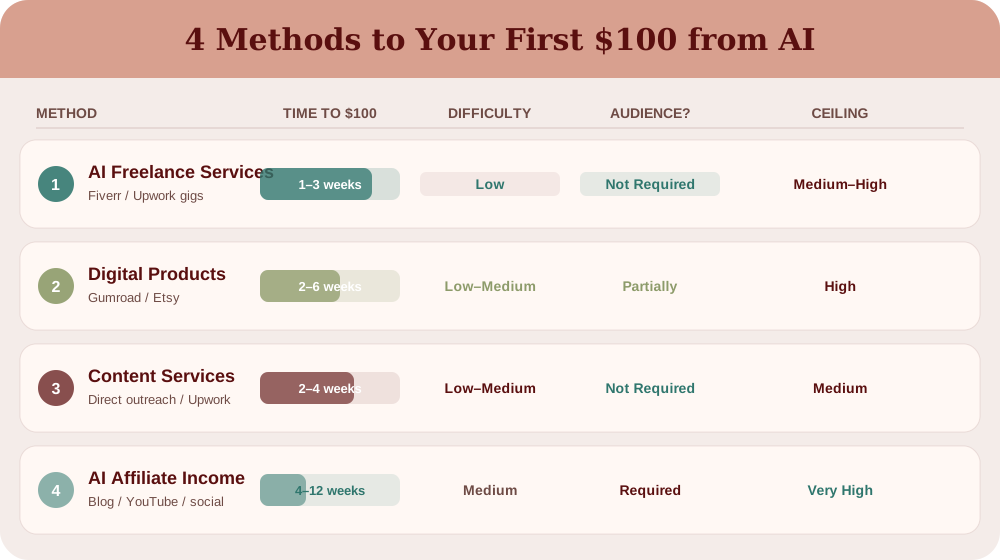
| Method | Time to $100 | Startup Cost | Difficulty | Needs Audience? | Income Ceiling |
|---|---|---|---|---|---|
| AI Freelance Services | 1–3 weeks | $0 | Low | No | Medium-High |
| Digital Products | 2–6 weeks | $0 | Low-Medium | Partially | High |
| Content Services | 2–4 weeks | $0 | Low-Medium | No | Medium |
| AI Affiliate Income | 4–12 weeks | $0 | Medium | Yes | Very High |
The Tools You Actually Need (Free Ones First)
Here is one thing almost every beginner gets wrong: they spend two weeks researching tools instead of spending two weeks earning money. The tools below are enough to make your first $100. Nothing more is required.
| Tool | Free Plan? | Best For | Paid Plan |
|---|---|---|---|
| ChatGPT (OpenAI) | Yes | Writing, ideation, copy | $20/mo for GPT-4 |
| Fiverr | Yes | Finding clients for services | N/A (they take commission) |
| Gumroad | Yes | Selling digital products | Paid plans from $10/mo |
| Canva | Yes | Design for products/gigs | $15/mo for Pro |
| Upwork | Yes | Freelance services (higher value) | N/A (commission model) |
| Claude (Anthropic) | Yes | Long-form writing, editing | $20/mo for Pro |
Start with ChatGPT free + Fiverr free + Canva free. That combination covers Method 1, Method 2, and Method 3 completely. Only consider paid upgrades after you've made your first $100 — use the earnings to invest in tools, not the other way around. For a full breakdown of free and paid options, read the best AI tools for beginners guide.
Realistic Timeline: When Should You Expect Your First $100?
I want to be direct here because this is where most online guides fail you completely. 'Make $100 in 24 hours with AI' is technically possible in the same way winning the lottery is technically possible. It is not what most beginners experience.
Here is what honest timelines actually look like:
| Method | Week 1 | Week 2 | Week 3–4 | Month 2+ |
|---|---|---|---|---|
| AI Freelance (Fiverr) | Setup, first gig live | First 1–2 orders | $50–$100 reached | Stable monthly income possible |
| Digital Products | Product creation | Listing live, sharing starts | First 1–3 sales | $100 milestone with consistent promotion |
| Content Services | Outreach begins | First response/client | First payment | Retainer possible |
| AI Affiliate | Content creation | Published, indexed | First clicks | First commission (maybe) |
Honest Note: These timelines assume 1–2 hours of focused daily work. Not consuming tutorials — doing the work. Setting up a Fiverr gig is 2 hours. Writing and formatting a digital product is a weekend. Sending 10 cold outreach emails is one afternoon. The timeline is largely in your control.
Mistakes Beginners Make That Delay Their First $100
These aren't theoretical. They're the five patterns that appear over and over in Reddit threads and Discord servers from people who've been 'trying to make money with AI' for months without results. If you want to understand the systems behind consistent AI income — not just the first $100 — the AI income systems guide covers the repeatable structure that makes this sustainable.
-
Starting with passive methods first. Affiliate income and digital product sales require an audience or traffic you probably don't have yet. Starting here instead of with active services is the most common reason beginners stay at $0 for months.
-
Method-hopping. Trying Fiverr for five days, switching to Gumroad, trying affiliate marketing, going back to Fiverr. Each method needs consistent effort for at least two to three weeks before you can judge it fairly. Switching every week means you never get traction on anything.
-
Pricing too low. Charging $5 for a service that takes 20 minutes and costs $0 in tools is not a strategy — it's a trap. Underpricing attracts low-quality clients who leave bad reviews. Charge what a real service is worth: $15–$35 for beginner gigs.
-
Learning forever, delivering never. There is no tutorial that will make you ready. You become ready by doing the work. The beginner who delivers five imperfect gigs will make more money than the one who spent those same hours watching 'how to succeed on Fiverr' videos.
-
Ignoring platform rules. Fiverr, Upwork, and Gumroad all have terms of service. Some explicitly require disclosure of AI tool usage in deliverables. Read the terms. Getting banned at $80 is worse than never starting.
Real Beginner Experiences — What Actually Happened
Rather than make unverifiable claims, here are real patterns reported by beginners in communities like r/AIIncomeLab and r/passive_income, which you can verify by searching those subreddits directly:
Multiple beginners on r/AIIncomeLab report their first Fiverr orders coming within 7 to 14 days of going live, with services including AI-written product descriptions and LinkedIn bios. The consistent thread: they priced at $15–$20, delivered same-day, and asked for reviews. No advanced tools, no paid subscriptions.
On r/passive_income, several users documented selling AI-generated prompt packs on Gumroad within the first month. The products were sold for $8–$15, marketed through free Reddit posts in relevant communities. First sales arrived in week two or three, not day one.
Where to Find Real Proof: If you want to see real, unfiltered beginner experiences, search 'first $100 AI' in r/AIIncomeLab and r/sidehustle. You'll find honest accounts, including failures — which are just as instructive as the wins. Don't trust only the success stories.
Your First $100 Action Plan — Do This Today
Information without action is just entertainment. Here is the exact sequence to follow:
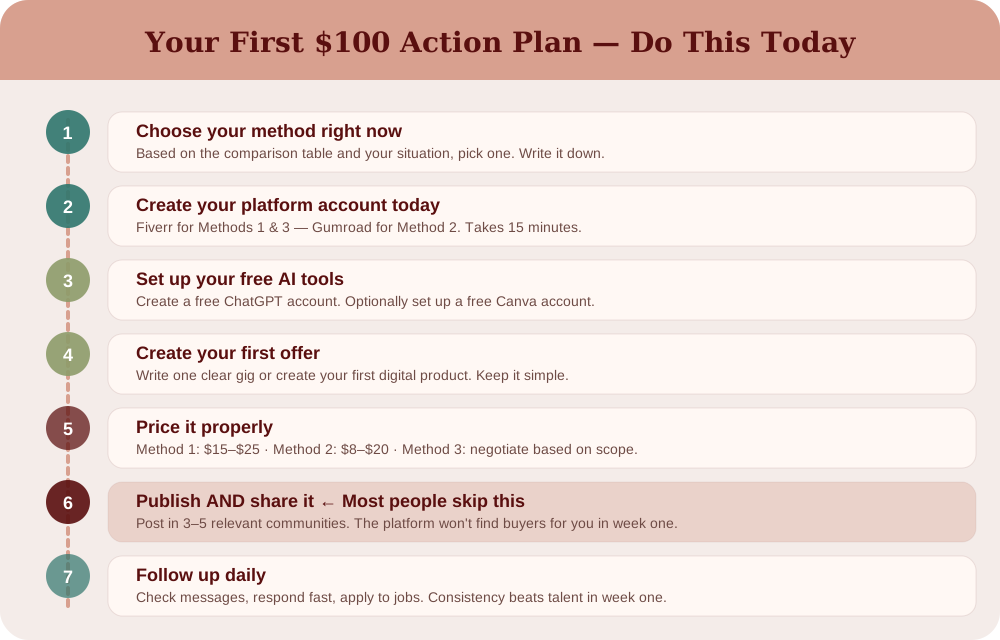
- Choose your method right now. Based on the comparison table and your situation, pick one. Write it down.
- Create your platform account today. Fiverr for Methods 1 and 3, Gumroad for Method 2. The account setup takes 15 minutes.
- Set up your free AI tools. Create a ChatGPT account if you don't have one. Optionally create a Canva account.
- Create your first offer. For Fiverr: write one gig description clearly explaining what you deliver, in what timeframe, at what price. For Gumroad: create your first product and upload it.
- Price it properly. Method 1: $15–$25. Method 2: $8–$20. Method 3: negotiate based on scope.
- Publish and share it. For Fiverr: your gig goes live. For Gumroad: share the link in 3–5 relevant online communities where potential buyers already exist.
- Follow up daily. Check messages, respond fast, apply to Upwork jobs if you're using that platform. Consistency beats talent in the early stages.
The Step Most People Skip: The single most common reason beginners don't reach $100 is that they complete steps 1 through 4 and then wait. You have to do step 6 — sharing and promoting — repeatedly. The platform will not bring buyers to you in the first two weeks. You have to go find them.
Final Word — Start Before You're Ready
Here is the uncomfortable truth about making money with AI: the tools are not the obstacle. The information is not the obstacle. You now have a clear framework, four tested methods, honest timelines, a comparison table, and a seven-step action plan.
The only thing that separates the people who make $100 from AI and the people who spend three months 'researching' is that the first group started before they felt completely ready. They set up a gig that wasn't perfect. They sent outreach emails that felt awkward. They published a digital product they weren't sure anyone would buy.
Your first $100 from AI will not come from knowing more. It will come from doing more.
Choose one method from this guide. Create your account today. Publish your first offer before you go to sleep tonight. Not tomorrow — tonight.
If your bigger question is what each path actually costs to run — free, under $50, or under $200 a month — the cost-tier breakdown in low-investment AI side hustles pairs naturally with the four methods above. For a specific digital product example with low build cost and recurring demand, the AI flashcard side hustle guide walks through creating and selling study decks on Etsy and Gumroad.
If you want a structured walkthrough with templates, prompt examples, and a step-by-step system built specifically around this goal, the First $100 With AI ebook is the companion to this guide.
Related AI systems
Continue with connected AI workflow guides.
AI Blog Post Outlining System: The 4-Part Framework for Long-Form SEO Content
A practical AI blog post outlining system that structures long-form SEO content before drafting — 4 steps from keyword intent to section briefs that write themselves.
Claude vs ChatGPT for SEO Blogging: A Task-by-Task Verdict
Claude vs ChatGPT for SEO blogging — a task-by-task breakdown of which AI wins for outlines, meta descriptions, tone editing, internal linking, and more.
AI Content Calendar for Niche Sites: A Practical Planning System
Build an AI content calendar for your niche site — keyword clustering, publishing cadence, seasonal timing, and a repeatable monthly planning system.